Residential and commercial properties have completely different security needs. A business premises needs constant monitoring.
If you are considering improving the safety of your business property, a modern security network can safeguard your stock, staff, and profits.
Professional security camera installation removes the hassle of expensive business disruptions before they even occur.
This guide by Surveillance Solutions breaks down what your company needs to consider. Learn what businesses should know before getting started so the planning process can be made simple, clear, and easy to follow.
The Basics of Security Camera Installation
At the heart of any business’s physical security measures is a professional security camera installation. It gives you full coverage of your work activities throughout the day. You can also read our guide to security camera installation services for homes and businesses.
When shopping for equipment, consider these benefits your business will have:
- Loss Prevention: Immediately prevents shoplifting, inventory loss, and internal theft.
- Liability defense: Supplies obvious visual evidence in opposition to bogus slip-and-fall lawsuits.
- Staff protection: Provides a safer working environment for your staff at night.
Assessing Commercial Surveillance Camera Systems
Today’s businesses need powerful machines that are able to provide sustained performance. A combination of the latest surveillance cameras can provide a comprehensive security barrier.
Finding the Best Camera Systems
Each business zone needs some specific kind of lens technology to provide clear information.
- Dome cameras: Ideal for indoor offices, as the direction of the lens is not apparent from the camera’s shape.
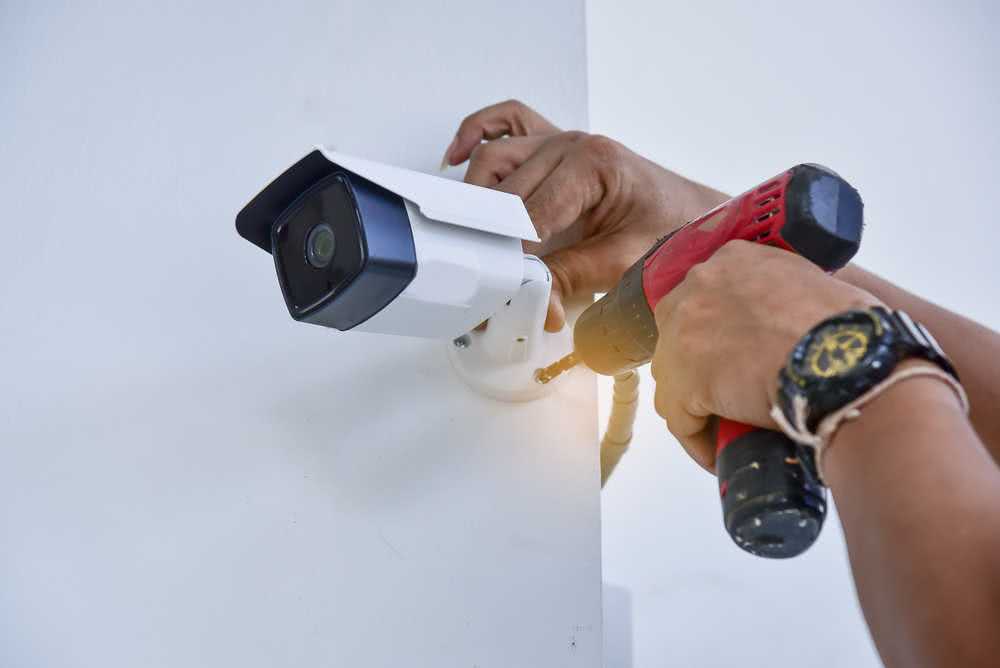
- Bullet cameras: Best for outdoor parking lots because they have long-range viewing potential.
- PTZ cameras: These cameras let you tilt, zoom, and pan on live video remotely.
Latest Video Security Features
Video footage comes in handy for security when the quality is good.
- High-resolution feeds: You can read license plates and cash with ease with 4K video resolution.
- Intelligent analytics: Smart software keeps a count of people coming in and going out. Loitering can also be tracked.
- Secure storage solutions: Data is stored on-site on hard drives while a copy is stored on the cloud server.
Want 24/7 eyes on your cameras? Our video monitoring services can help, and you can learn more in How Video Monitoring Improves Property Security and Business Safety.
| Camera Lens Type | Best Placement Location | Main Security Purpose |
|---|---|---|
| Dome Lens | Office interiors and retail stores | Tracks employee and customer movement |
| Bullet Lens | Loading docks and parking lots | Visible deterrent to outdoor crime |
| PTZ Cameras | Large warehouses and perimeter walls | Active tracking of moving targets over distance |
Placement and Installation of Your Business Cameras
Installation of a video security system at a business premises should be properly planned. You need to be aware of the privacy laws and legal requirements before you start recording in a public place.
Do not install your cameras before you do the following:
- Find blind spots: Find high-risk areas. Your cash registers, billing counters, back exits, and safes are more at risk than you think.
- Read privacy laws: Installing cameras where the privacy of an employee or a customer can be violated is not allowed by law. Do not set up cameras in bathrooms, breakrooms, or dressing rooms.
- Check your network bandwidth: See that the network you are using at your office is capable of streaming HD-quality videos.
- Hire Professionals: Do not let an amateur install your system. Get a certified team on board.
Planning your budget? See our breakdown of security camera installation cost in 2026.
Why Professional Installation Matters for Business Security
- Professional installers check network architectures and know how to maximize your safety on a minimal budget.
- They are aware of the legal requirements of each area.
- They use high-quality equipment to install all sorts of camera systems.
- They conceal the systems for better protection.
Cameras work best as part of a complete system. Pair them with a professionally installed alarm system (see our alarm installation services guide), plus card access for doors and GPS tracking for vehicles and equipment.
Conclusion
Commercial surveillance cameras are a worthy investment for the future of your business. But you should not just install the first camera system you could find.
Business security needs proper planning to make sure that you select the network architecture that is appropriate for your layout.
Call a professional. Get your workplace assets secured with the right installation strategy. Contact us or call (401) 823-7000 for a free quote.
We proudly serve businesses in Providence, Pawtucket, Cranston, Warwick, and East Providence, RI. Visit our Our Services page to see everything we offer.
Frequently Asked Questions
What makes IP cameras different from analog camera systems?
IP systems transmit digital video through normal Internet lines at a higher resolution. Older coaxial cables are used for analog images, which do not have the picture quality of digital cables.
In which space is it not allowed for a business to install a camera?
Cameras cannot be used in private places such as bathrooms or dressing rooms. Failure to do so will result in strict employee and customer privacy laws being violated.
What amount of storage space is required for a commercial video security system?
Your commercial video security system should have storage large enough to handle more than 30 days of footage. The larger the resolution, the bigger the storage drive needed.
If the power goes out, do the surveillance cameras work?
Yes, if the system is connected to an Uninterruptible Power Supply (UPS) backup battery. This backup will maintain power for the cameras until the main power is restored.
Which cameras should be used for a business: wireless or wired camera systems?
Wired systems are highly recommended, as they are the most reliable and do not have signal interference. Wireless systems need fast internet at all times to work, so they can lag when the network gets busy.